5 Data-driven Strategies to Drive Business Growth in 2026
A quick guide to 2026’s top data-driven marketing strategies. AI personalization, predictive analytics, smarter budgeting, and human-centric engagement to fuel growth and better customer experiences.
In today’s fast-moving digital economy, data is the backbone of modern marketing. It enables brands to understand customers deeply, personalize experiences, make smarter decisions, and grow with measurable impact.
As generative AI, real-time analytics, and predictive intelligence mature, marketers now have unprecedented opportunities to use data to build meaningful, relevant, and scalable customer experiences.
This refreshed 2026 edition of the blog explores five updated data-driven marketing strategies shaped by new research, modern tools, and real brand examples.
Why Data-driven Marketing Matters in 2026
Data-driven marketing helps brands deliver the right message, to the right person, at the right moment — every time.
Why it’s more important today:
- 71% of consumers expect personalized interactions. — McKinsey
- 76% feel frustrated when personalization is missing. — McKinsey
- 89% of enterprises now invest in Customer Data Platforms (CDPs). — Inforverity
- 75% of marketers are implementing or experimenting with AI. — Salesforce 2024
The brands winning today are those who combine data + AI + human-centered insight to shape smarter customer journeys.
Infographic 1: The Modern Data-driven Marketing Engine 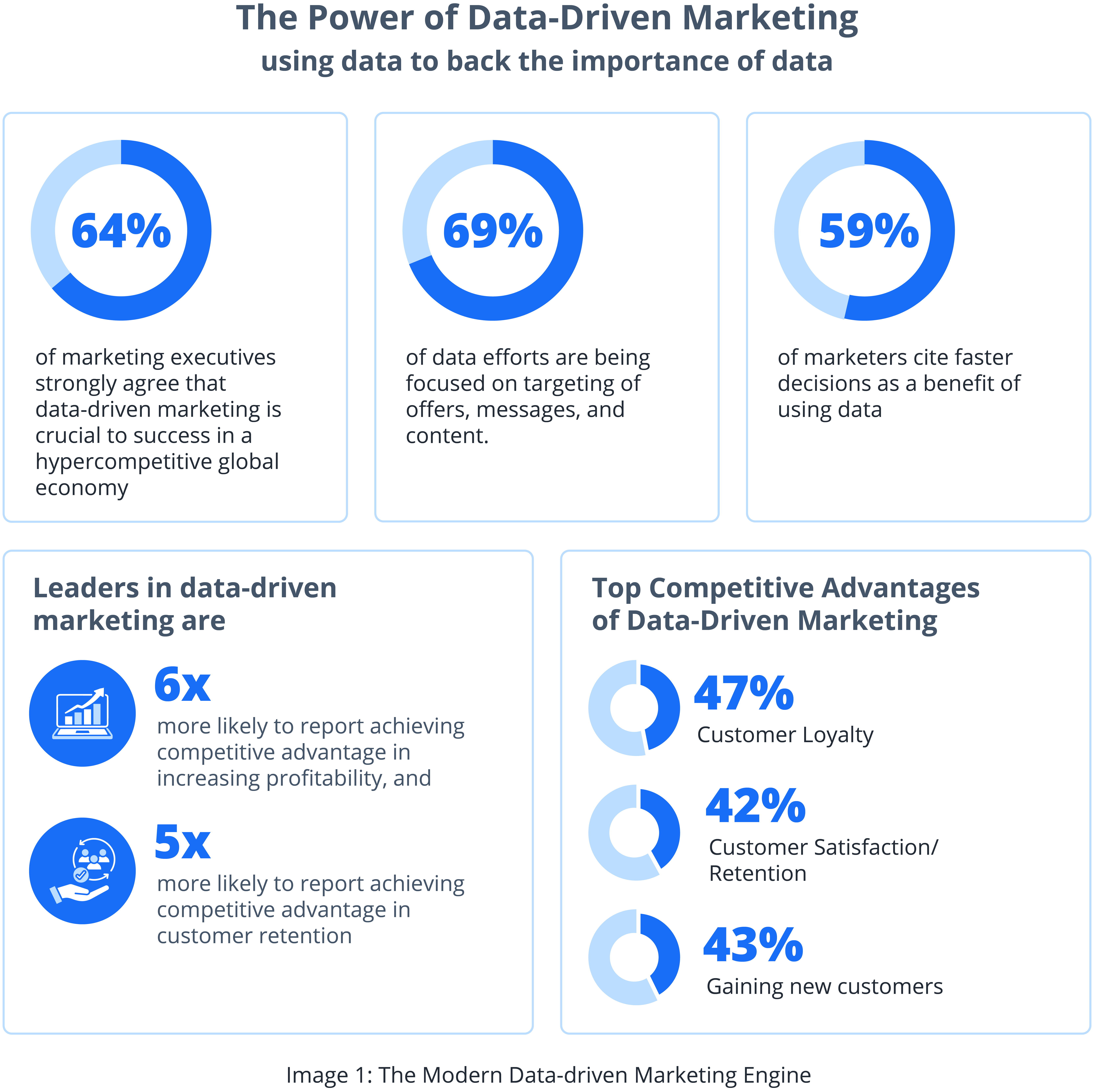
Top 5 Data-driven Marketing Strategies for 2026
1. Hyper-Personalization Powered by AI & Real-Time Data
Traditional segmentation is outdated. Customers now expect brands to understand their behaviors, preferences, and needs — instantly.
Modern hyper-personalization includes:
- Real-time dynamic content
- AI-generated personalized messages
- Predictive customer scoring
- Personalization across web, app, email, ads
- Unified customer profiles via CDPs
What leading brands do today:
- Sephora uses AI to suggest personalized routines and shades.
- Starbucks Deep Brew customizes offers using purchase patterns.
- Netflix uses real-time behavior to shape recommendations.
2026 tactics to adopt:
- Personalized website modules based on intent
- AI-powered product recommendations
- Adaptive journeys using tools like Braze or Adobe Journey Optimizer
Stat to note:
Real-time personalization can increase conversions by up to 20%. — McKinsey
2. Predictive Data Analysis & AI Forecasting
Predictive analytics enables brands to anticipate customer needs and act before the customer even expresses intent.
Predictive analysis helps you:
- Identify high-value audiences
- Forecast product demand
- Reduce churn
- Build targeted offers
- Optimize promotions and merchandising
Current examples:
- Spotify’s AI DJ uses NLP + ML to craft real-time curated streams.
- Walmart uses demand forecasting to optimize supply chains.
- Netflix predicts engagement to greenlight new content.
Stat:
Predictive analytics adoption has grown 70% YoY. — Gartner
3. Data-Oriented Budget Optimization with AI
Marketing leaders now rely on data and AI to optimize budget allocation with precision rather than intuition.
Key optimization techniques:
- Media MixModeling(MMM) Measures channel effectiveness using historical performance and external factors.
- Multi-Touch Attribution (MTA)Assigns credit across all touchpoints in the customer journey.
- AI-Powered Media Buying Tools like Google Performance Max and Meta Advantage+ autonomously refine bids, creatives, and audiences.
Example:
- DoorDash uses AI-driven budget allocation, reducing marketing costs by 10%–30% while maintaining customer acquisition volumes.
4. AI as the Core Engine of Marketing
AI is transforming how brands create content, run campaigns, personalize experiences, and understand consumers.
Where AI is making the biggest impact:
- AI-Generated Creative Tools like Adobe Firefly and Canva AI automate variations of ad creatives and messages.
- Conversational AI WhatsApp chatbots, AI-powered CX assistants, and voice assistants guide users like human agents.
- Autonomous Campaign Optimization AI adjusts budgets, bids, creative, and audiences in real time.
- Behavior-based Recommendations AI identifies what a customer is likely to click, buy, or ignore — and adjusts content accordingly.
Stat:
86% of companies say AI is now central to their operations. — PwC
5. Human-to-Human (H2H) Marketing in an AI World
Even with AI everywhere, customers crave warmth, empathy, and human understanding.
Consumers now favor brands that:
- Speak with authenticity
- Are transparent about how AI and data are used
- Provide human support when needed
- Build relationships, not transactions
What modern H2H looks like:
- Humanized chatbots with personality
- Customer support agents trained for empathy
- Lighthearted, relatable social interactions
- Values-based messaging that aligns with customer beliefs
Supporting data:
- 83% prefer authentic, human brands. — Stackla
- 68% trust brands more when AI usage is disclosed. — PwC
Infographic 2: How AI and Humans Work Together in Modern Marketing 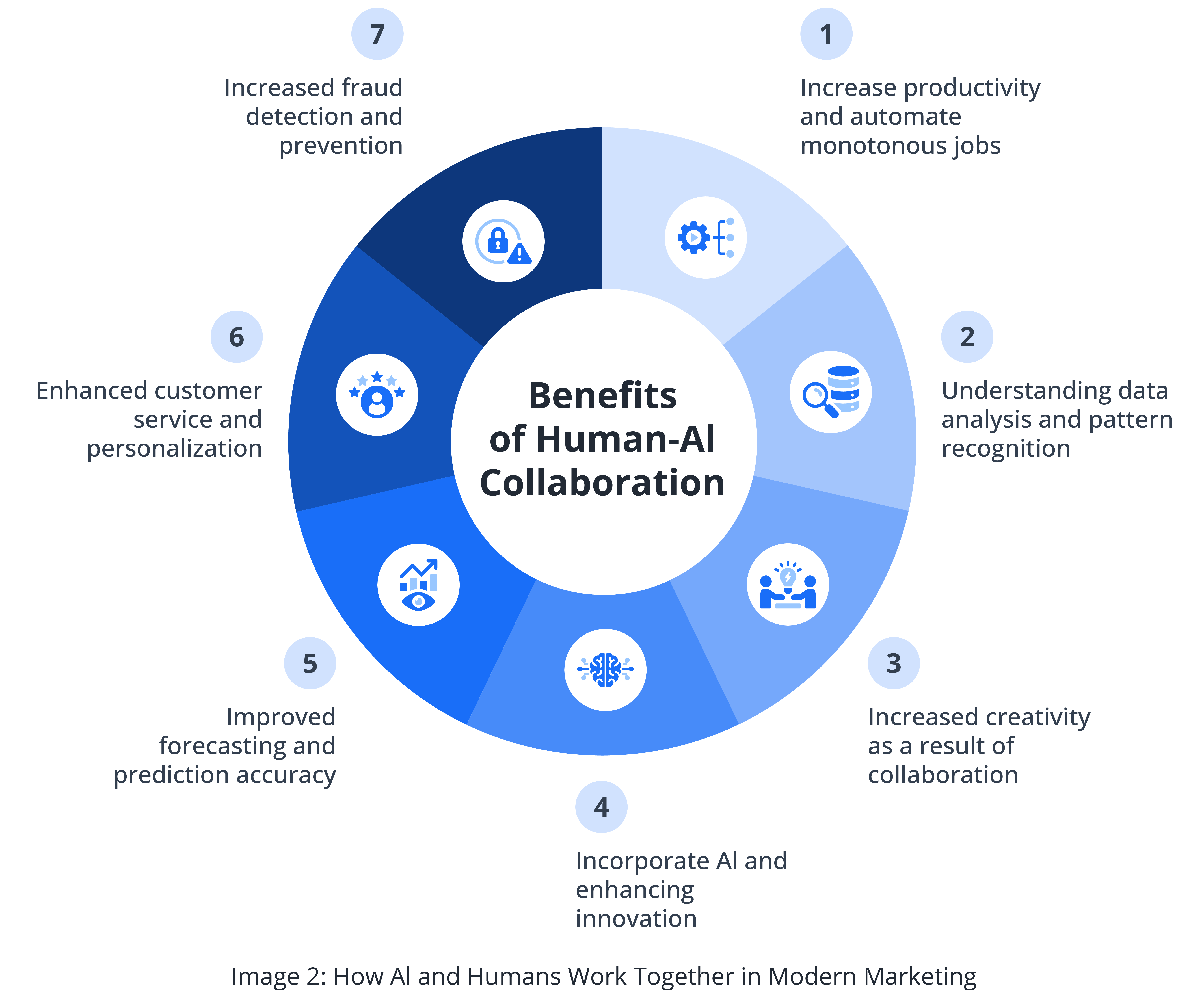
Endnote
Marketers today must blend data, AI, creativity, and empathy to deliver meaningful customer experiences. The brands that succeed in 2026 will be those that:
- Use AI to scale efficiency
- Use data to deliver relevance
- Use human insight to build trust
- Use personalization to create emotional resonance
These five strategies will help future-proof your marketing engine and build customer relationships that truly last.