
B2B Online Chicago has earned its reputation as the one event where manufacturers and distributors stop talking about digital transformation in the abstract and start talking about what's actually working. This year was no different, except the urgency was sharper, the questions were more specific, and the gap between leaders and laggards was more visible than ever.
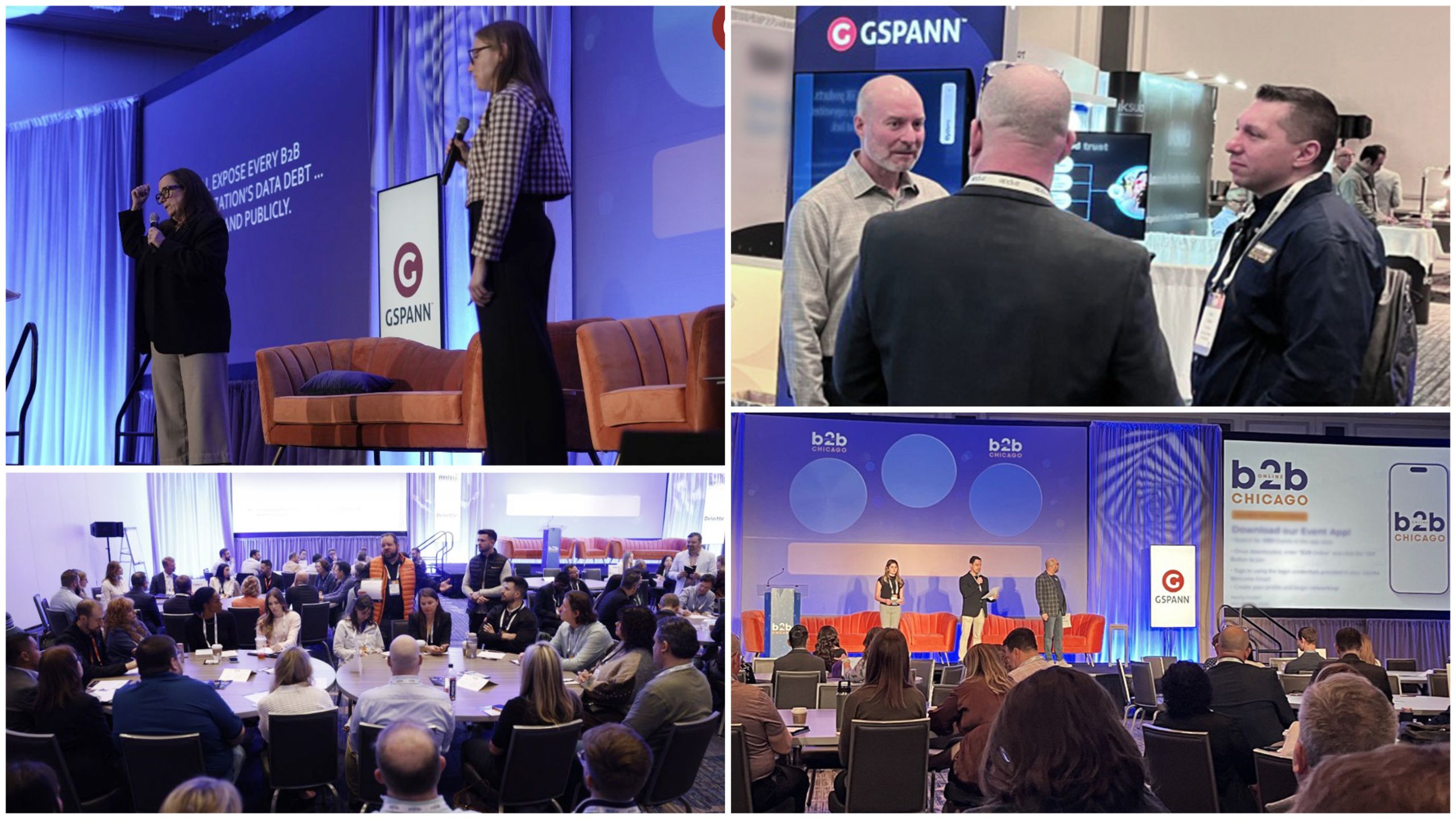
GSPANN was on the ground where Sumit Kapoor, our Vice President of Engineering, took the stage as part of a panel discussion on product data, the single biggest bottleneck still holding back B2B commerce at scale. Here's what we saw, what we heard, and what it means for the road ahead.
The Conversations That Defined This Year
If there was one overarching theme at B2B Online 2026, it was this: the industry has moved past asking whether to invest in AI and digital, it's now figuring out where to be intentional about it.
The hot takes session was one of the most engaged discussions of the entire event. Leaders from across manufacturing and distribution were candid about where they are in their transformation journeys, what's delivering results, what's still evolving, and where teams are choosing to be more deliberate with their priorities rather than chasing every shiny object. There was a clear and refreshing theme around being thoughtful with AI, zeroing in on the use cases that will actually move the needle rather than layering it onto everything at once.
That pragmatism carried through every track. Day one's general sessions centered on the future of connected customer journeys, while day two pushed into scalable omnichannel experiences. A dedicated AI breakout track ran across both days, but even there, the tone was grounded. The practitioners weren't looking for conceptual inspiration; they were looking for practical solutions to real, everyday challenges.
The Data Panel: It's Not a Data Shortage, It's an Alignment Problem
Sumit Kapoor's panel session cut straight to execution. The conversation stayed remarkably grounded, and the consistent message from every panelist was one that resonated across the room: most B2B companies don't have a data shortage. They have an alignment problem.
A few themes kept surfacing throughout the discussion:
Different teams are working off different versions of the customer.
Sales sees one profile, marketing sees another, and the commerce platform serves up a third. When your product data lives in eight different systems, PIM, ERP, DAM, commerce, syndication feeds, the challenge isn't collecting more data. It's getting everyone to work from the same truth.
Data exists, but it's not always structured in a way that's usable.
Attributes are inconsistent across channels. Descriptions were written once and never updated. Specs that AI agents can only half-read. The data is technically there, but it's not ready to power the experiences buyers now expect or the machine-driven discovery that's rapidly replacing traditional search.
Speed of decision-making is becoming a competitive factor.
The panel emphasized that the companies pulling ahead aren't necessarily the ones with the best data; they're the ones who can act on their data fastest. When it takes weeks to enrich a new product line or months to syndicate clean content to distributor portals, you're not just slow, you're invisible to the AI agents that buyers are increasingly using to shop.
The focus was less on collecting more data and more on making existing data actionable. That shift, from accumulation to activation, was arguably the most important takeaway from the entire event.
What We Brought to Our Booth
We didn't come with slides. We came with working solutions.
At the booth, our team ran live demos and strategy sessions across two core areas that map directly to the challenges discussed on stage:
AI-Powered Product Content
We showed how ContentHubGPT takes SKUs from three attributes to thirty, generating rich descriptions, technical specs, SEO metadata, and syndication-ready feeds at scale, all governed by brand rules. For companies sitting on catalogs of 100,000-plus SKUs and wondering how to make that content AI-agent ready without hiring a bigger content team, this was the conversation that kept going well past the demo.
Intelligent B2B Commerce
From guided selling and AI-powered CPQ to account-specific catalogs and pricing, we demonstrated what it looks like to build the B2B buyer experiences that today's customers expect, like seamless reorder, self-service quoting, cross-channel continuity, all on top of existing ERP, PIM, and pricing logic.
The conversations were specific and pointed. Leaders weren't asking us if they needed to modernize their product data infrastructure. They were asking how fast they could move, and what it would take to get there without breaking existing downstream feeds and partner integrations.
The Bigger Picture: Agentic Commerce is No Longer Theoretical
One theme that wove through keynotes, panels, and hallway conversations alike was the rise of agentic commerce. AI agents aren't a future concept anymore, they're actively reshaping how B2B buyers discover, compare, and purchase products. The question that kept coming up: if a buyer's AI assistant can't read your catalog, are you even in the consideration set?
This is where the data bottleneck becomes existential, not just operational. An incomplete product listing that a human buyer might work around, for example calling to clarify a missing dimension, is a listing that an AI agent simply skips. The bar for product data completeness, structure, and consistency has fundamentally changed, and it's only going up.
For GSPANN, this wasn't a new conversation. We've been building toward this reality with ContentHubGPT's AI-discoverable content engine, our commercetools and Adobe Commerce implementations aligned with emerging protocols like UCP and ACP, and our data quality platforms like BEAT. But it was validating to see the broader industry arriving at the same conclusion: the catalog that isn't built for machines is the catalog that disappears.
What Stays with Us
B2B Online 2026 confirmed what we've seen across our client engagements: the companies that will outperform in the next few years won't be the ones with the most data or the most advanced AI deployments. They'll be the ones who fix the alignment problem first, who get their teams working from a single version of the customer, who make their product data usable and agent-ready, and who treat speed of execution as a strategic advantage rather than an operational afterthought.
To everyone who stopped by our booth, attended Sumit's panel, or grabbed a few minutes between sessions to talk through your challenges, thank you. Those conversations are what keep us sharp, and they're what drive the solutions we build.
The work doesn't stop in Chicago. If any of the themes above resonate with where your team is right now, whether it's enriching a massive catalog, making your commerce stack agentic-ready, or simply getting your product data to a place where it's actually driving revenue, we'd love to continue the conversation.
Let's Keep Building
Reach out to our B2B commerce experts at marketing.team@gspann.com to explore how we can work together.
Learn more about GSPANN's B2B commerce practice and ContentHubGPT at gspann.com.