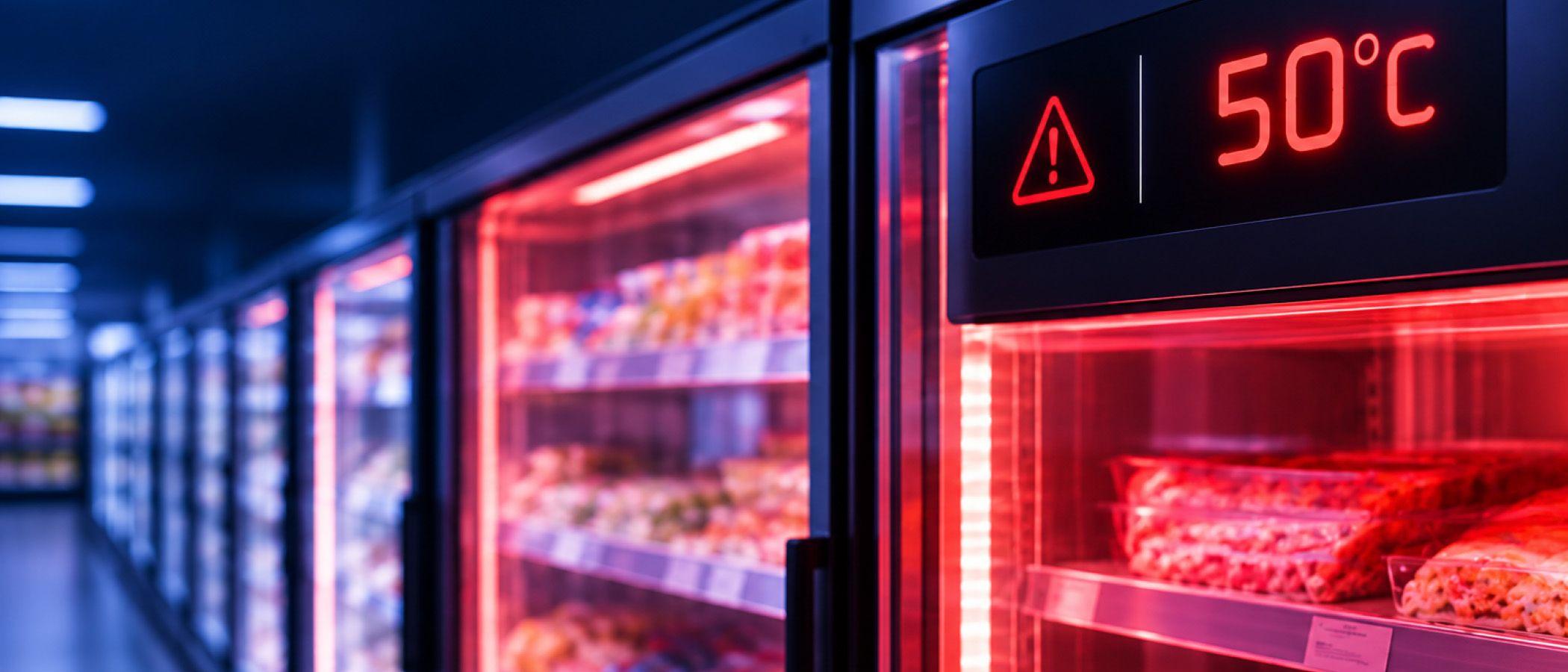

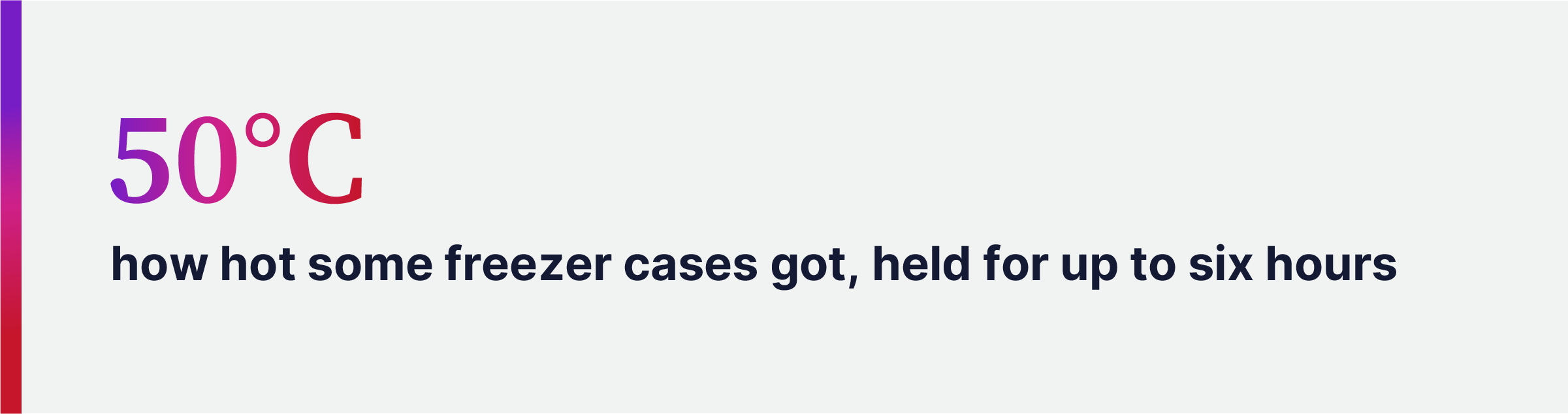
On October 12, staff at hundreds of supermarkets in France arrived to find their freezers heating instead of cooling. Hackers had accessed the refrigeration systems through weak IoT device security and switched them to defrost mode, pushing temperatures as high as 50°C (122°F).
The attack damaged equipment and left stores with large quantities of spoiled food. France's government reported that 700 stores were affected.
Three weeks later, similar incidents hit supermarkets in at least 10 countries, including Belgium, Sweden, Finland and Italy, and even reached cold rooms at France's blood service. Several stores had to discard spoiled food. A security firm also logged attempts to access these systems using factory-default passwords. Similar freezer failures at US military stores are being investigated as possible cyberattacks.
Then, in the last couple of weeks, a newly installed router held every US flight departure for over four hours, and a software bug slowed payments at the largest US bank. Officials say neither was a cyberattack.
While both the flight delay, and the Bank issues are still stories are still developing, the warnings are clear as day. Attack or accident, retailers need a plan to keep the business running. For now, let’s study the Freezer hack as an example. [1] [2] [3] [34] [36] [37]
Could the supermarket freezer hack happen in the US?
There are signs it may have already happened. US Defense Department investigators are looking into at least six freezer failures at military commissaries in August as possible cyberattacks. They have not confirmed the cause or linked them to the attacks in France.
On November 5, CISA, the FBI and three other federal agencies issued a joint warning about attacks on refrigeration controllers in grocery and cold-storage facilities, and the retail industry's security group has issued warnings to its members. There's also reason for concern: 58 of 89 exposed US control panels of the affected model were still running outdated software when the French attack happened.
The risk is real, and if an attack happens, retailers could be left dealing with both spoiled food and the cost of the damage.[4] [5] [6] [35]
Does cyber insurance cover food spoiled by a hack?
Cyber insurance policies typically don't cover spoiled food or other physical losses. A separate property policy may help, but cyber-related exclusions could apply.
The losses can be significant: two stores in Alsace reportedly lost €270,000 worth of stock, while one supermarket group expects damages of several million euros. Retailers are now also questioning who is responsible for the losses and who will pay.[7] [8] [9]
The way in was a login left open on the internet
The attackers accessed a web server that allowed technicians to monitor temperatures and change settings remotely. Researchers found that weak passwords and an outdated login system made it easy to gain access. France's cyber agency also pointed to weak passwords and internet exposure as key security gaps.
The bigger concern? Fixes for these known IoT vulnerabilities had been available for more than a year, but many systems remained exposed.[10] [11] [12]
A public fix was easy but not many did it
The manufacturer released security fixes in March and August 2025, but many systems remained unprotected.
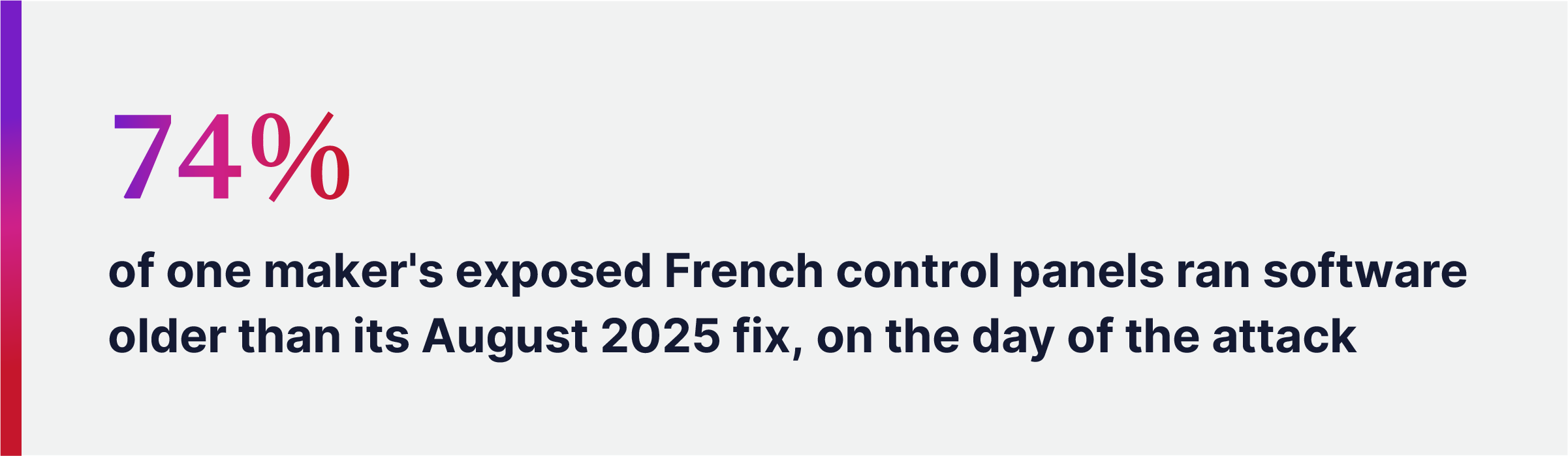
Before the attack, 74% of its exposed control panels in France were still running outdated software. The warning signs and fixes were there. What was missing was someone taking responsibility for applying them.[13] [14] [15]
The freezer is one of many connected devices in a store
Modern stores rely on many connected devices, from cash registers and card terminals to cameras, printers, shelf labels and bakery ovens. These devices often connect to the internet for monitoring, updates and maintenance.
While no attacks on commercial ovens have been reported, researchers have demonstrated that electronic shelf labels can be hacked to change displayed prices. The price at checkout, however, remained unchanged.
But how vulnerable are these everyday devices?
Forescout identified printers, time clocks and RFID readers among the riskiest connected devices. Its research also found that only 20% of network segments with a checkout system had no other devices connected to them. Segments with a checkout system also held printers (46%), internet phones (36%) and cameras (30%).
This means a security weakness in an ordinary store device could also put more critical systems at risk.[16] [17]
This has happened earlier as well
Connected devices have been used to breach networks before. In 2017, hackers used an internet-connected fish tank at a North American casino to send 10GB of data to Finland. In 2013, attackers reportedly accessed a major US retailer's network through credentials stolen from its refrigeration contractor.
Both incidents show how overlooked devices and weak access controls can put entire networks at risk.[18] [19]
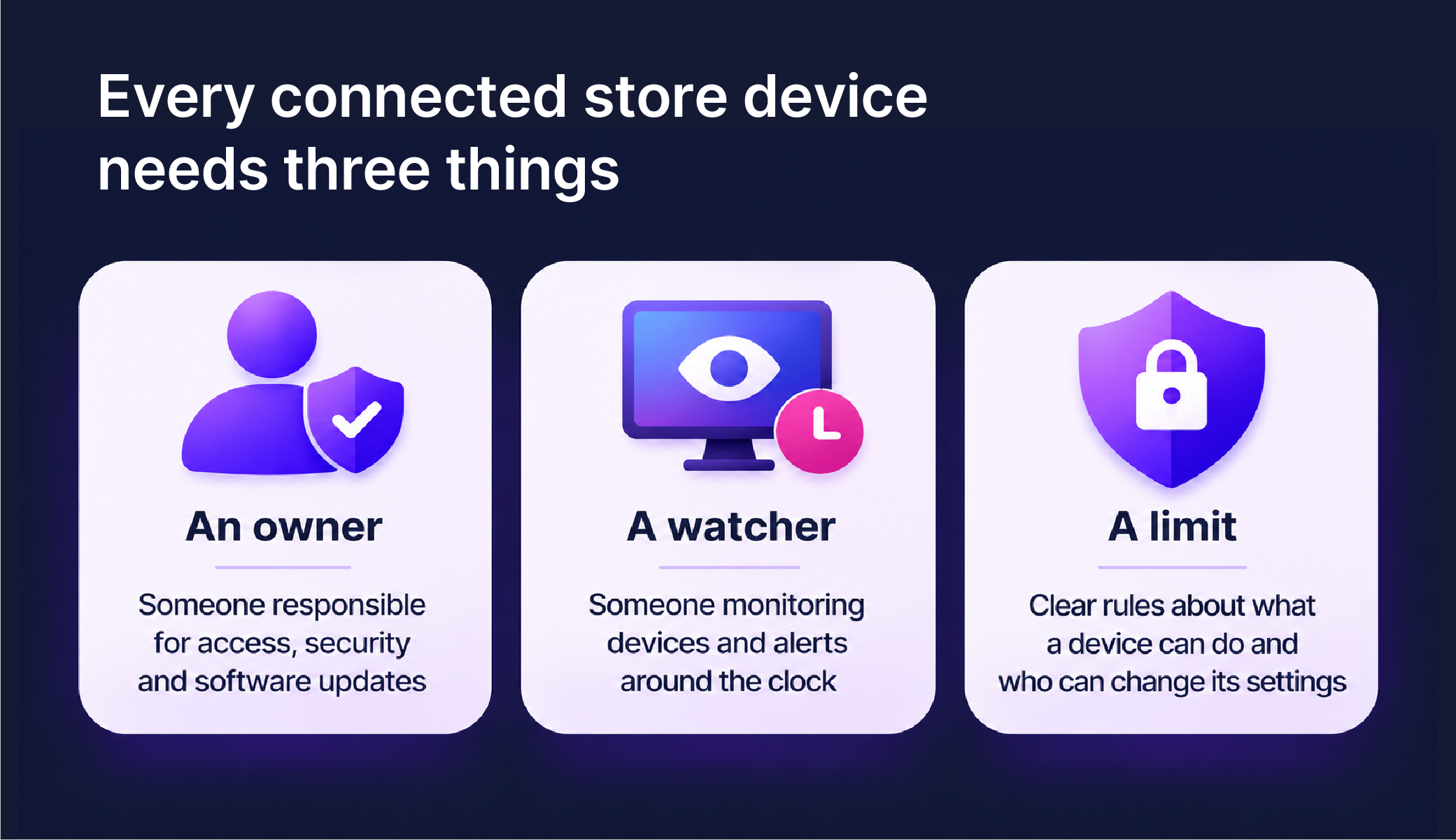
Every connected device in a store needs three things defined: owner, watcher and limit
An owner responsible for its security and updates; a watcher who monitors it and responds to alerts; and a limit on what it can do.
In France, all three were missing, allowing hackers to turn freezers into heaters and destroy tons of food. The first step is knowing who is responsible for each device. [20]
Nobody in IT owned the freezer
Many French supermarkets rely on outside contractors to manage refrigeration systems. After the attacks, some retailers pointed to their suppliers, who were responsible for maintaining the equipment.
The same applies to ovens, cameras and shelf labels. Vendors often install and manage these devices remotely, sometimes without IT teams knowing how they are connected. The result? Suppliers control access, but retailers bear the losses. [21] [22]
The freezers were online so that someone could watch and service them
The refrigeration systems were connected to the internet for remote temperature monitoring and maintenance. But during the attacks in France, nobody noticed the freezers heating overnight. Initial investigations suggest the attackers had disabled the alarms or kept temperatures below alert levels.
One solution is to monitor all connected devices, including freezers, ovens, payment terminals and cameras, through a central system that works independently of the equipment. With someone monitoring it around the clock, unusual readings could be spotted and addressed before they cause serious damage. [23] [24]
A freezer accepted an order to heat itself for hours
The freezer had no limits in place to stop it from running its defrost heater for hours, reaching temperatures as high as 50°C. The same risk applies to other store devices. Ovens, shelf labels and other connected equipment need clear rules about what they can do and who can change their settings.
As retailers adopt more cloud-connected systems and AI-powered tools, these safeguards become even more important. Any system, whether controlled by a person or an AI agent, needs clear limits and approval for unusual changes. [25] [26]
An AI found two of the published flaws in a few hours
Security firm Finite State used AI to analyse the controller's software and found two of its three known flaws within hours. While there is no evidence AI was used in the attacks, this shows how quickly it can identify security gaps.
It also highlights why retailers cannot afford to delay software updates and security fixes.[27] [28]
The fix that worked first needed no patch
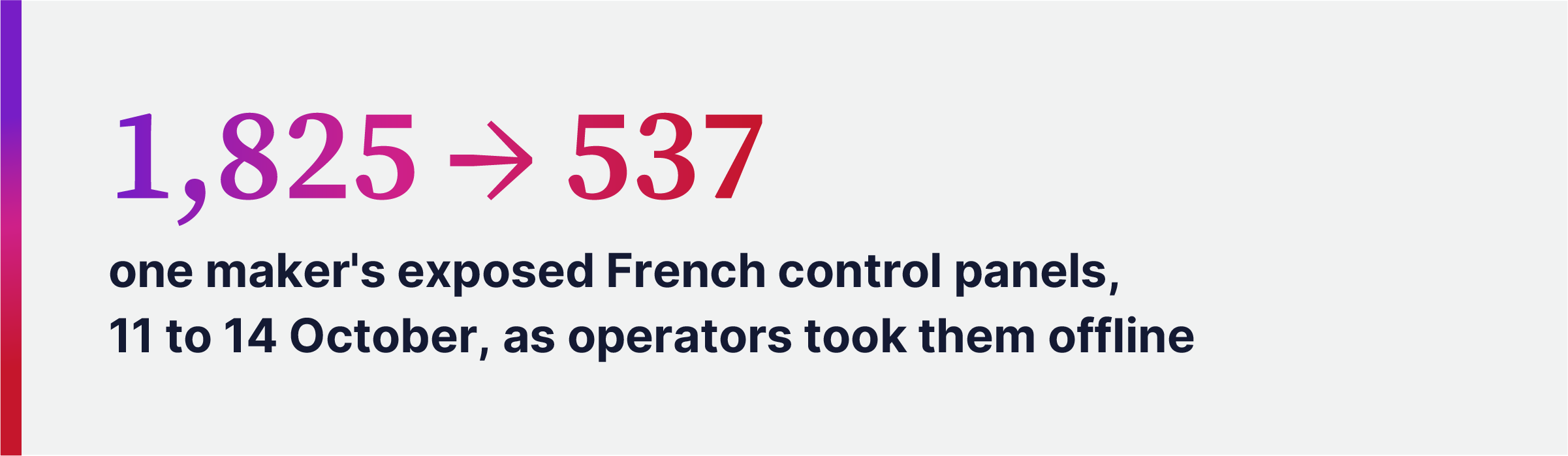
The quickest fix in France was simply to take the control panels offline. Within three days, exposed panels dropped from 1,825 to 537, a 71% reduction. Censys found that operators had removed them from the internet rather than installing patches.
CERT-FR recommends the same approach for affected devices, along with secure remote access and updated security settings. The second wave showed what happens when this step is missed: many of the affected freezers still had internet-facing control panels, and some had no available patch.
The first step is simple: know which devices are connected and whether they need to be online at all.[29] [30] [31]
How do I know which devices in my store are connected to the internet
Start by asking contractors for a list of all devices they manage, including their software versions and remote access details. Compare this with your own network records to spot any missing devices.
You can also use tools like Censys or Shodan to check which devices are exposed to the internet. Any device with a publicly accessible login page needs attention, even if it has a password.
The US agencies' November 5 checklist adds the rest: keep control devices off the internet, put any remote access behind an updated firewall, give store equipment its own network, change default passwords, replace end-of-life devices, keep tested offline backups, and set alerts on temperature limits. Plan, too, for the hours when something fails anyway, attack or accident: who checks food temperatures by hand, where stock goes, and how the store keeps selling if payments or a cloud service go down.[32] [33] [35]
GSPANN'S TAKE
- The freezer attacks read like a story about clever hackers. The cause was a login left on the internet with weak passwords, no clear owner, alarms the attacker could switch off, and no limit.
- A store today runs many connected devices, from the till to the bakery oven, and suppliers install and service many of them.
- All three answers can be settled for each device, and most need decisions before they need new hardware. They hold whether the next failure is an attack or an accident.
- The watcher is an operations job: every device's readings and alerts in one place, monitored around the clock, with a runbook that sends a person to the store.
- GSPANN does this kind of work for retailers in managed services and operations, with 24x7 monitoring, SRE practices and incident management, and its quality engineers test the limit: what a system accepts when the input is wrong.
- The cheapest control in this whole story was taking a device off the internet.
This month showed how many ways a store can stop, from freezers to flights to payments. Nobody can predict the next one, but every store can be ready for it: each connected device watched and tested, and a plan to keep selling while one is down. The right technology gets a store there, and GSPANN can help.
All References:
Ref 1: https://questions.assemblee-nationale.fr/q17/17-1841QG.htm
Ref 2: https://www.theguardian.com/world/2026/oct/17/who-hacked-frances-supermarket-fridges
Ref 3: https://www.cnbc.com/2026/11/03/supermarket-fridges-hack-cyberattack-europe.html
Ref 6: https://censys.com/blog/frostbitten-in-france-a-danfoss-storeview-internet-exposure-report/
Ref 7: https://www.carriermanagement.com/news/2026/10/20/292812.htm
Ref 8: https://www.insurancejournal.com/news/national/2026/10/22/889881.htm
Ref 9: https://global.lockton.com/au/en/news-insights/cyber-risk-doesnt-always-start-behind-a-screen
Ref 10: https://cert.cyber.gouv.fr/alerte/CERTFR-2026-ALE-012/
Ref 12: https://cyberplace.social/@GossiTheDog/117429582060804473
Ref 13: https://www.cisa.gov/news-events/ics-advisories/icsa-25-140-03
Ref 14: https://censys.com/blog/frostbitten-in-france-a-danfoss-storeview-internet-exposure-report/
Ref 15: https://www.danfoss.com/en/service-and-support/articles/dcs/tech-insider-october-2025/
Ref 16: https://www.connectedcooking.com/en_us/
Ref 17: https://troopers.de/downloads/troopers26/TR26_Priceless_DAARST.pdf
Ref 19: https://krebsonsecurity.com/2014/02/target-hackers-broke-in-via-hvac-company/
Ref 20: https://cyberplace.social/@GossiTheDog/117429582060804473
Ref 22: https://www.insurancejournal.com/news/international/2026/10/21/889797.htm
Ref 23: https://www.theguardian.com/world/2026/oct/17/who-hacked-frances-supermarket-fridges
Ref 27: https://finitestate.io/blog/refrigeration-controller-vulnerability-firmware-teardown
Ref 28: https://www.cnbc.com/2026/11/03/supermarket-fridges-hack-cyberattack-europe.html
Ref 29: https://censys.com/blog/frostbitten-in-france-a-danfoss-storeview-internet-exposure-report/
Ref 30: https://cert.cyber.gouv.fr/alerte/CERTFR-2026-ALE-012/
Ref 31: https://cyberplace.social/@GossiTheDog/117547117661284939
Ref 32: https://censys.com/blog/frostbitten-in-france-a-danfoss-storeview-internet-exposure-report/
Ref 36: https://www.faa.gov/newsroom/nationwide-ground-stop-questions-and-answers
Ref 37: https://www.cnbc.com/2026/11/16/jpmorgan-chase-technical-issue.html