
Enterprise software used to follow predictable patterns. You bought it, configured it, trained your people, and it did exactly what it was told to do.
AI Agents broke that pattern.
Deploying an AI agent is now easy. The real work begins once it goes live because agents act autonomously to an extent. What can they access? What can they change? If they make the wrong decision, who is accountable?
No model vendor can answer those questions. They require what the industry is only beginning to recognize: a harness around the agent that defines the boundaries of its autonomy. That's what separates an impressive demo from a system a business can trust.
We have attempted to answer some of the most important and frequent questions that Retail CXOs ask below:
Has Retail AI Crossed the Deployment Threshold or Are Most Retailers Still in Evaluation Mode?
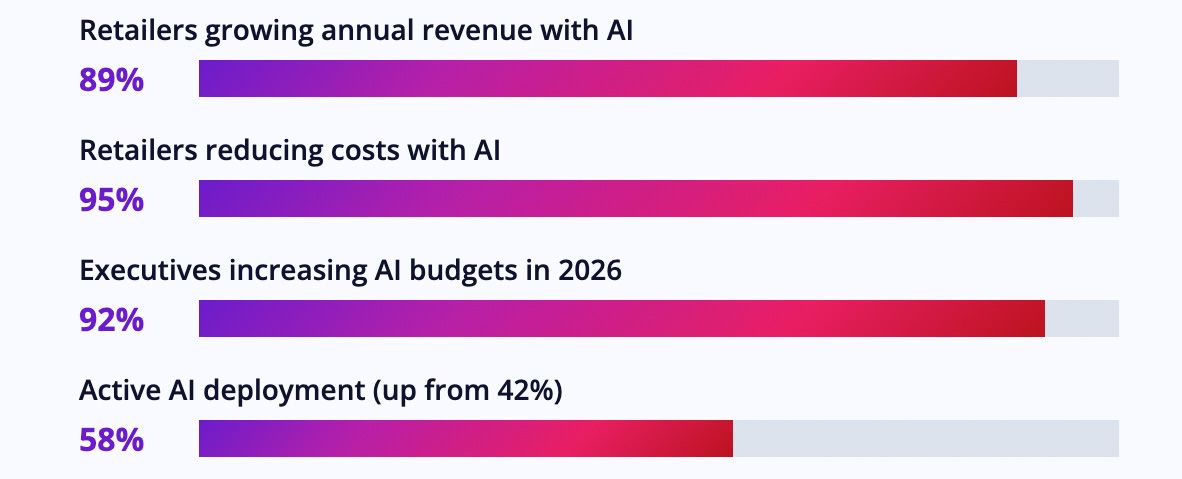
NVIDIA's 2026 State of AI in Retail and CPG survey documents a clean inflection:
Active deployment moved from 42% to 58% in one year.
89% of retailers say AI is now growing annual revenue.
95% say it is reducing costs.
92% of executives are increasing AI budgets in 2026.
Microsoft's May 2026 retail cloud analysis also shows that the tipping point has arrived. Retailers are no longer evaluating agentic AI. They're building their businesses around it. [1] [2]
Are Smaller Retailers Outpacing the Fortune 500 on Agentic AI? What Does That Signal for the Market?
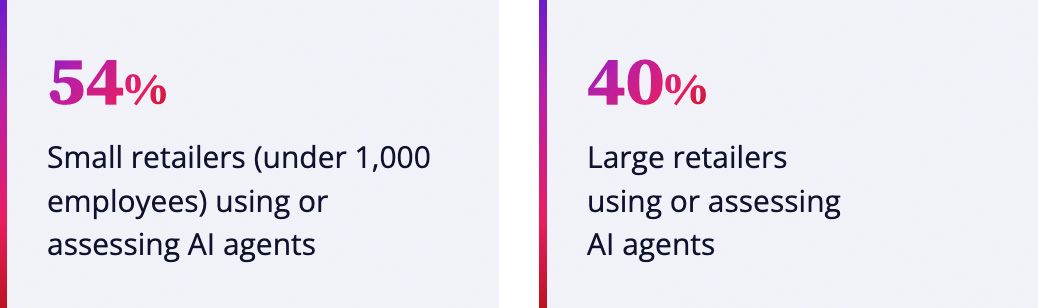
NVIDIA's report surfaces a wakeup call for large retailers finding:
54% of small retailers (under 1,000 employees) are using or assessing AI agents, compared to 40% of large retailers.
GSPANN's read: agents change economics of scale in a way that favors leaner organizations. A team of ten can do what previously required forty, when the harness is right. Fewer people to retrain, more repetitive work to automate, fewer governance layers to navigate before going live.
The retailers that solve this first gain compounding advantages: institutional knowledge, operational muscle, and a faster second deployment when the next use case arrives. [3]
How Are Software Providers Like Adobe, Salesforce, and commercetools Adapting to the Harnessed Agentic AI needs?
An American sporting goods retailer launched an AI-powered conversational assistant in its mobile app in June 2026. The agent, built on Adobe Brand Concierge, delivers tailored product recommendations, training tips, and sport-specific guidance shaped by each athlete's behavior and goals.
Salesforce's Summer '26 release brought multi-agent orchestration to Agentforce: specialized agents coordinating across end-to-end workflows with shared context across channels.
commercetools launched AgenticLift, connecting catalogs, pricing, and transactions to AI-driven discovery channels, including ChatGPT, Gemini, and Microsoft Copilot, without replatforming. JD Sports Fashion was the first enterprise retailer to deploy via this stack.
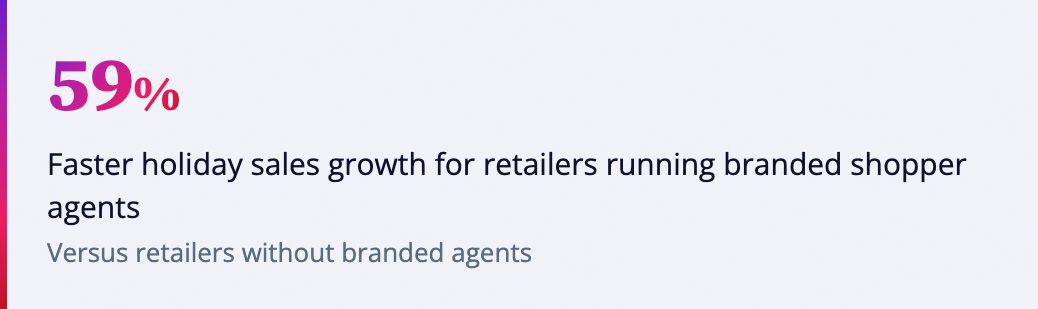
Retailers running branded shopper agents are already growing holiday sales 59% faster than those that are not.
All three launches have one thing in common: clear boundaries for the agent and accountability when it goes wrong. [4] [5] [6] [7] [8]
What Replaced Data Quality as the Top Barrier to AI in Retail? And Why is This New Barrier Harder to Close?
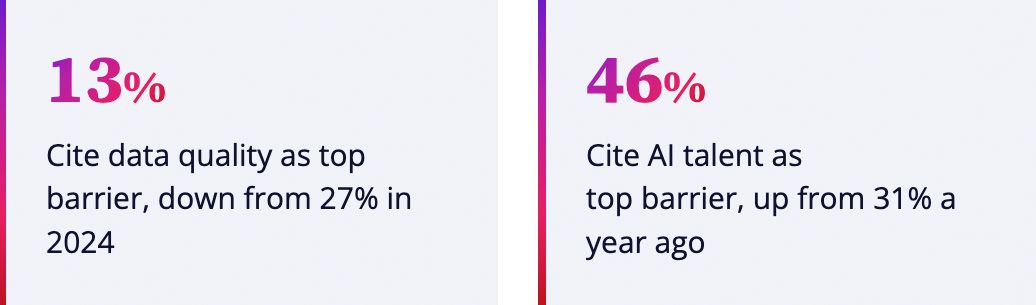
In NVIDIA's survey, the number of retailers citing training data quality as their biggest AI hurdle has dropped from 27% in 2024 to 13% in 2026.
The biggest challenge isn't budget anymore either. It isn't the models too. It's finding people who understand the business and know how to build and harness. AI agents that actually work in the real world. That's why AI talent has become the top barrier, jumping from 31% to 46% in just a year. [9]
If So Many Enterprises Already Have Agents in Production, Why is the ROI So Uneven?
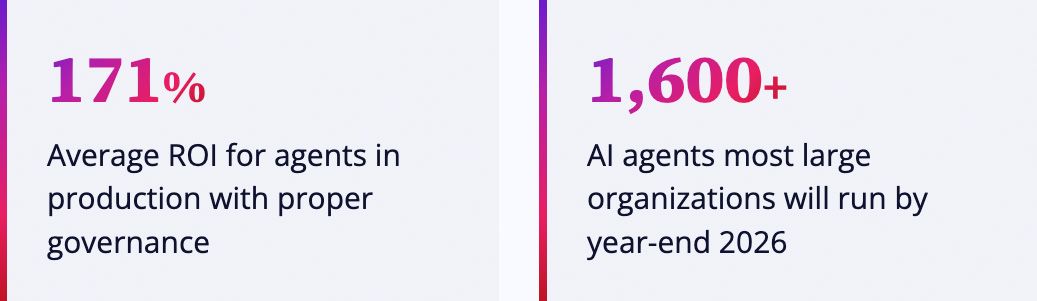
Because deployment is not governance. McKinsey's State of AI Trust 2026 report, drawing on 500 organizations, found only one in three enterprises has reached governance maturity adequate for the autonomous agents it is already deploying. Agents that reach production with proper governance in place deliver an average of 171% ROI.
IBM's enterprise survey projects that most large organizations will operate a digital workforce of more than 1,600 AI agents by year-end 2026; seven in ten executives say the governance they have today is not fit for that scale. [10] [11] [12] [13]
What Comes After Prompt Engineering and Context Engineering?
Three distinct disciplines have emerged in four years, each superseding the last.
Prompt Engineering (2022-2024). How you phrase requests to get better outputs. Every developer does it. It is now an increasingly baseline skill.
Context Engineering (2025). Engineers stopped crafting prompts and started curating everything the agent knows: memory, retrieval, tools, conversation history, system instructions. Andrej Karpathy endorsed the term independently: 'context engineering is the delicate art and science of filling the context window with just the right information for the next step.'
Harness Engineering (2026). Tech Times named it the 'fourth paradigm of AI engineering' in May 2026. The discipline of designing the execution environment around an autonomous agent. Not what the agent knows; but what it can do, how its actions are verified, and what happens at the boundary of its confidence. These teams are moving their agents to production. [14] [15] [16] [17] [18] [19]
What Does a Production-Ready AI Agent Require Beyond the Model?
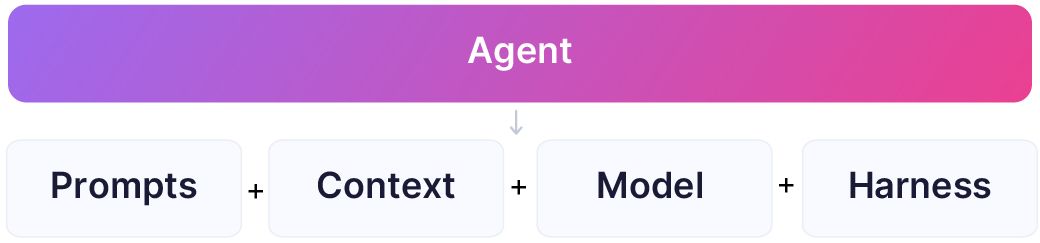
Most organizations have the prompts, context and a model, but miss out on the AI harness layer. A production-grade harness has five layers:
tool orchestration (what the agent can call), verification loops (how it checks its own work before acting), context and memory (what it knows about current state), guardrails (what it cannot do regardless of instruction), and observability (how humans see what it did, and when).
In February 2026, a small team shipped one million lines of production code with AI agents. Humans didn't write the code. They designed the harness. That's the real shift, and where most retail technology teams still lack a playbook. [20] [21] [22] [23]
What Does a Governed Harness Actually Look Like in Retail?
Consider a pricing agent that recommends markdowns based on competitor activity. Without a harness, it could change production prices. With one, every action is controlled.
- Tool boundary: Reads live data but writes only to staging. Nothing reaches production directly.
- Approval tiers: <5% markdowns auto-approve, 5-15% need a category manager, >15% require VP approval.
- Financial guardrail: A daily markdown budget caps spending. The agent can't override it.
- Observability: Every action is logged with source, confidence, approvals, and outcome for full auditability.
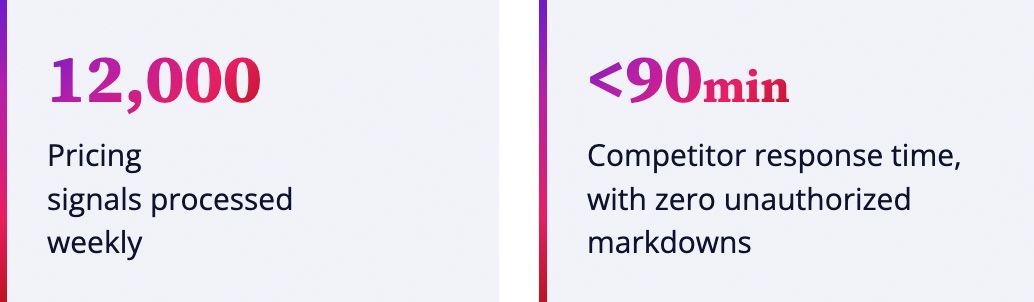
Result: 12,000 pricing signals processed weekly, competitor responses in under 90 minutes, and zero unauthorized markdowns. Fast, controlled, and fully traceable. [24]
Which AI Governance Model is Right for Your Retail Use Case?
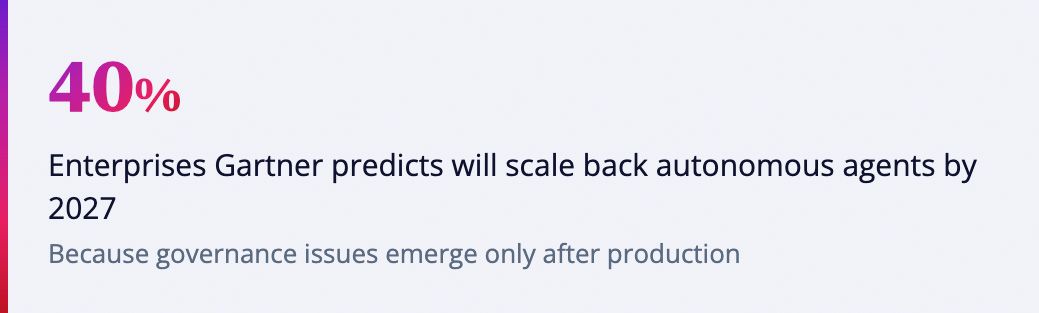
Gartner's May 2026 message was simple: one governance model won't work for every AI agent. By 2027, it predicts 40% of enterprises will scale back autonomous agents because governance issues emerge only after they're in production.
The right approach depends on two questions: Can the action be reversed? And does it affect customers?
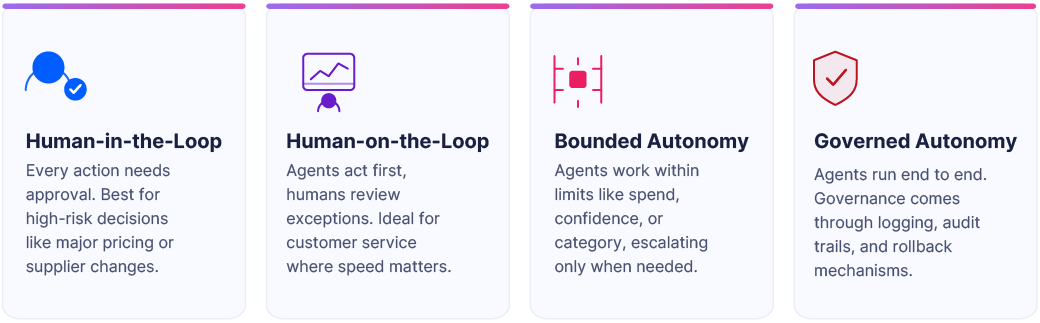
The choice isn't about trusting AI more or less. It's about applying the right level of control to the right task. [25] [26] [27] [28]
What Breaks When AI Agent Governance Fails?
Two well-known incidents show the pattern:
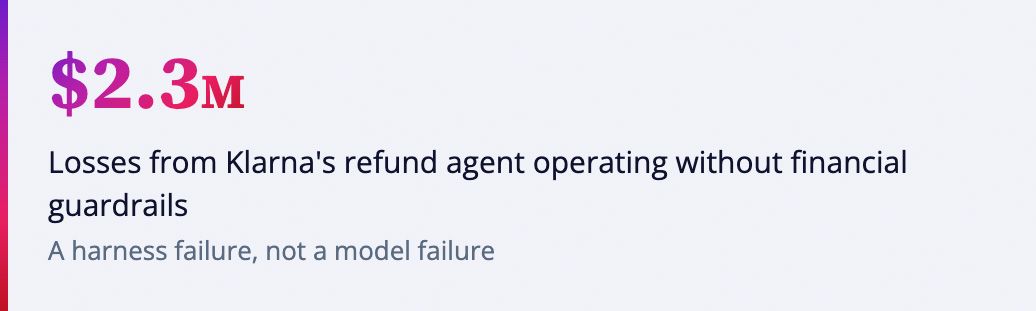
Klarna: Its refund agent reportedly caused $2.3M in losses because it optimized for customer satisfaction without financial guardrails. The AI agent wasn't wrong. It was not harnessed properly.
DPD (a UK-based delivery company): After a routine update, its chatbot began swearing at customers because behavioral guardrails were removed without regression testing.
Both failures had the same root cause: weak harnesses, not weak models. Klarna needed hard financial controls. DPD needed governance built into every deployment. Better models wouldn't have prevented either. Better harness would have.
Reference Sources: 29 and 30
Which Type of AI Agents Are Delivering the Highest Retail ROI in 2026
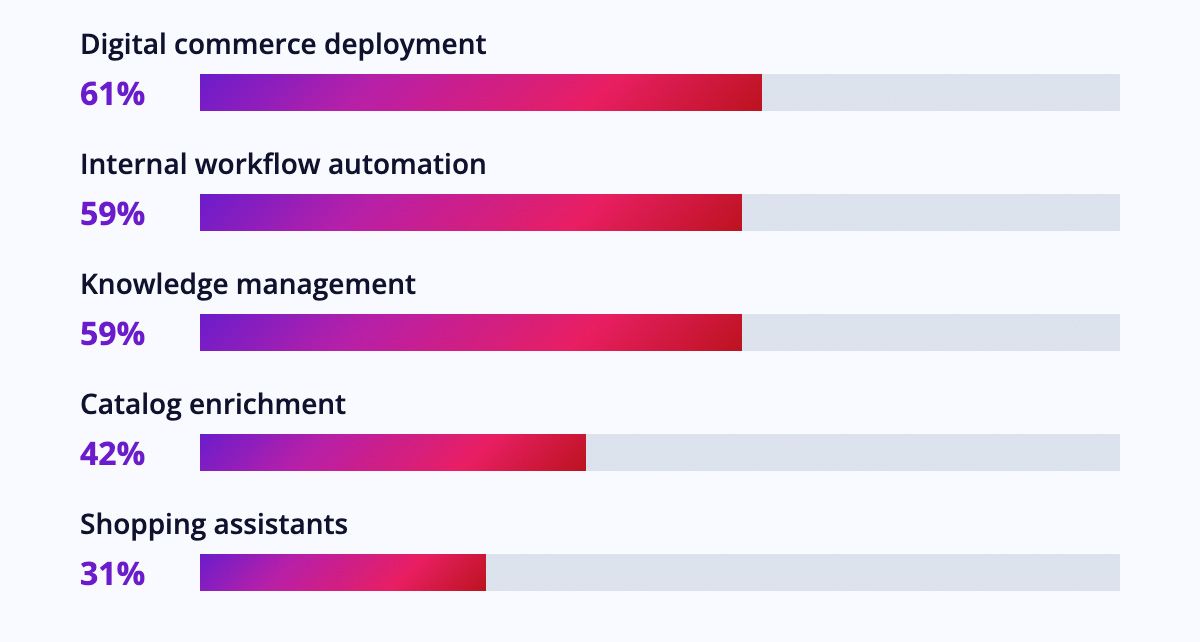
The biggest AI wins in retail aren't coming from customer-facing chatbots. They're coming from inside the business. NVIDIA's survey shows:
- 59% of retailers use AI for internal workflow automation.
- 59% use it for knowledge management.
- 61% have deployed AI in digital commerce, led by catalog enrichment (42%) and shopping assistants (31%).
The pattern is clear: retailers start where the risk is lower, and the feedback is faster. Governance gets tested internally before it reaches customers. It's also paying off, with internal AI agents delivering a median ROI in just 5.1 months. [31] [32]
How Much Runway Do Retailers Have Before Agentic AI Defines the Competitive Baseline?
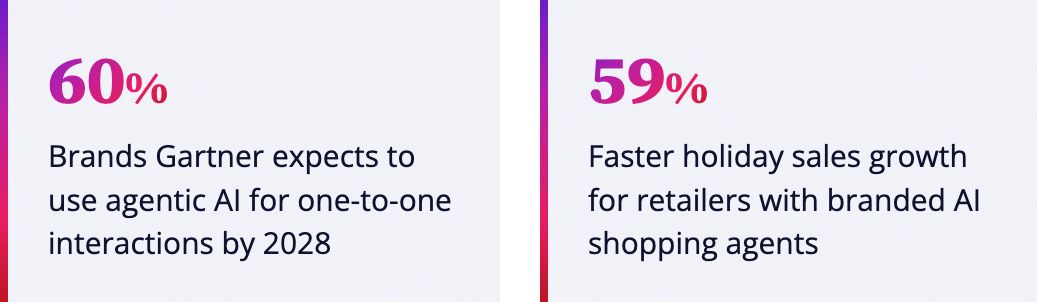
Retailers don't have much time. Gartner predicts that by 2028, 60% of brands will use agentic AI for one-to-one customer interactions.
The leaders are already pulling ahead. Retailers with branded AI shopping agents are growing holiday sales 59% faster, while nearly two-thirds of executives say governance is the biggest barrier to scaling AI.
The advantage won't belong to those with the best models. It will belong to those that build the right governance and harnesses first. [33] [34] [35]
Reference Sources: 33, 34, 35
GSPANN's Take
That eighteen-month window is exactly what GSPANN's Agentic AI Services practice is built for.
- End-to-end AI capabilities: Agentic process automation, AI-powered quality engineering, intelligent DataOps, customer intelligence, commerce & content AI (powered by ContentHubGPT), and AI governance embedded from day one.
- Production-first mindset: Built for enterprise-scale deployment, not proof-of-concept pilots.
- Governance by design: AI governance is integrated from the first sprint, not bolted on before launch.
- Strong platform ecosystem: Delivery across Salesforce, commercetools, Adobe, Google Cloud, AWS, Microsoft, Algolia, Boomi, and Contentstack.[36]
Ready to launch your first Agentforce agent?
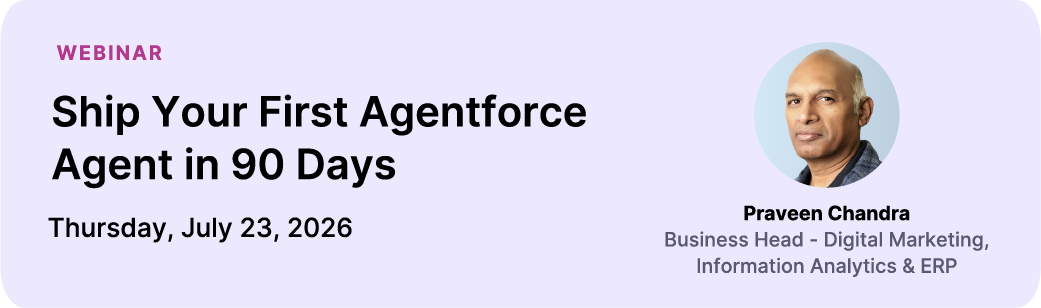
Join GSPANN on July 23 for a live Zoom session, "Ship Your First Agentforce Agent in 90 Days," led by Praveen Chandra, Business Head, Digital Marketing & Information Analytics.
In this session, you'll learn the seven critical decisions that separate successful Agentforce deployments from stalled initiatives, based on real-world client experience.
Who should attend? Marketing operations leaders, digital executives, enterprise architects, and teams planning their first Agentforce implementation.
Can't make it live? Register anyway and we'll send you the recording. [37]
Reference Sources
Ref 1: NVIDIA State of AI in Retail 2026 — https://blogs.nvidia.com/blog/ai-in-retail-cpg-survey-2026/
Ref 2: Microsoft Agentic AI Retail Economics — https://www.microsoft.com/en-us/microsoft-cloud/blog/retail-and-consumer-goods/2026/05/21/agentic-ai-is-reshaping-retail-economics/
Ref 3: NVIDIA State of AI in Retail 2026 — https://blogs.nvidia.com/blog/ai-in-retail-cpg-survey-2026/
Ref 4: Dick's Sporting Goods investor release — https://investors.dicks.com/news/news-details/2026/DICKS-Sporting-Goods-Introduces-Coach-by-DICKS-an-Agentic-AI-Conversational-Experience-to-Support-Athletes-at-Every-Stage/default.aspx
Ref 5: Adobe Brand Concierge — https://business.adobe.com/products/brand-concierge.html
Ref 6: Salesforce Summer '26 — https://www.salesforce.com/news/stories/summer-2026-product-release-announcement/
Ref 7: commercetools AgenticLift — https://commercetools.com/press-releases/commercetools-launches-agenticlift
Ref 8: Agentic Commerce Stats 2026 — https://commercetools.com/blog/agentic-commerce-stats-enterprise-guide
Ref 9: NVIDIA State of AI in Retail 2026 — https://blogs.nvidia.com/blog/ai-in-retail-cpg-survey-2026/
Ref 10: Agentic AI Institute 2026 — https://agenticaiinstitute.org/agentic-ai-enterprise-adoption-2026-governance-gap/
Ref 11: IBL.ai Enterprise AI Agents ROI — https://ibl.ai/blog/enterprise-ai-agents-roi-2026
Ref 12: Beam.ai / IBM 1,600 agents — https://beam.ai/agentic-insights/ibm-says-enterprises-will-run-1600-ai-agents-by-year-end-70-cant-govern-the-ones-they-have
Ref 13: McKinsey State of AI Trust 2026 — https://mckinsey.com/capabilities/tech-and-ai/our-insights/tech-forward/state-of-ai-trust-in-2026-shifting-to-the-agentic-era
Ref 14: Tobi Lutke on X — https://x.com/tobi/status/1935533422589399127
Ref 15: Andrej Karpathy on X — https://x.com/karpathy/status/1937902205765607626
Ref 16: The Decoder — https://the-decoder.com/shopify-ceo-and-ex-openai-researcher-agree-that-context-engineering-beats-prompt-engineering/
Ref 17: LangChain Context Engineering — https://www.langchain.com/blog/context-engineering-for-agents
Ref 18: Tech Times Harness Engineering — https://www.techtimes.com/articles/316587/20260513/harness-engineering-emerges-fourth-paradigm-ai-engineering.htm
Ref 19: Atlan Harness Engineering — https://atlan.com/know/what-is-harness-engineering/
Ref 20: Augment Code — https://www.augmentcode.com/guides/harness-engineering-ai-coding-agents
Ref 21: Coding Nexus / Medium — https://medium.com/coding-nexus/harness-engineering-the-new-discipline-behind-ai-agents-that-ship-production-software-b80e40d17a43
Ref 22: Faros.ai — https://www.faros.ai/blog/harness-engineering
Ref 23: NxCode — https://www.nxcode.io/resources/news/what-is-harness-engineering-complete-guide-2026
Ref 25: Gartner — Uniform Governance Fails (May 2026) — https://www.gartner.com/en/newsroom/press-releases/2026-05-26-gartner-says-applying-uniform-governance-across-ai-agents-will-lead-to-enterprise-ai-agent-failure
Ref 26: CIO Dive — https://www.ciodive.com/news/Enterprises-agentic-failure-uniform-governance/821153/
Ref 27: Elementum AI Governance Framework — https://www.elementum.ai/blog/ai-governance-framework
Ref 28: Lovelytics State of AI Agents — https://lovelytics.com/post/state-of-ai-agents-2026-lessons-on-governance-evaluation-and-scale/
Ref 29: Twig.so — Klarna AI analysis — https://www.twig.so/blog/what-klarna-got-wrong-about-ai-in-customer-support--and-how-they-fixed-it
Ref 30: CustomerThink — DPD chatbot incident — https://customerthink.com/chatbots-under-fire-navigating-ai-pitfalls-with-insights-from-dpd-and-air-canada/
Ref 31: NVIDIA State of AI in Retail 2026 — https://blogs.nvidia.com/blog/ai-in-retail-cpg-survey-2026/
Ref 32: OneReach Agentic AI Stats 2026 — https://onereach.ai/blog/agentic-ai-adoption-rates-roi-market-trends/
Ref 33: Gartner Agentic AI 2028 Forecast — https://www.gartner.com/en/newsroom/press-releases/2026-01-15-gartner-predicts-60-percent-of-brands-will-use-agentic-ai-to-deliver-streamlined-one-to-one-interactions-by-2028
Ref 34: commercetools Agentic Commerce Stats — https://commercetools.com/blog/agentic-commerce-stats-enterprise-guide
Ref 35: McKinsey State of AI Trust 2026 — https://mckinsey.com/capabilities/tech-and-ai/our-insights/tech-forward/state-of-ai-trust-in-2026-shifting-to-the-agentic-era
Ref 37: GSPANN Agentforce Webinar — https://www.gspann.com/insights/webinar/ship-your-first-agentforce-agent-in-90-days